Last updated November 22, 2026
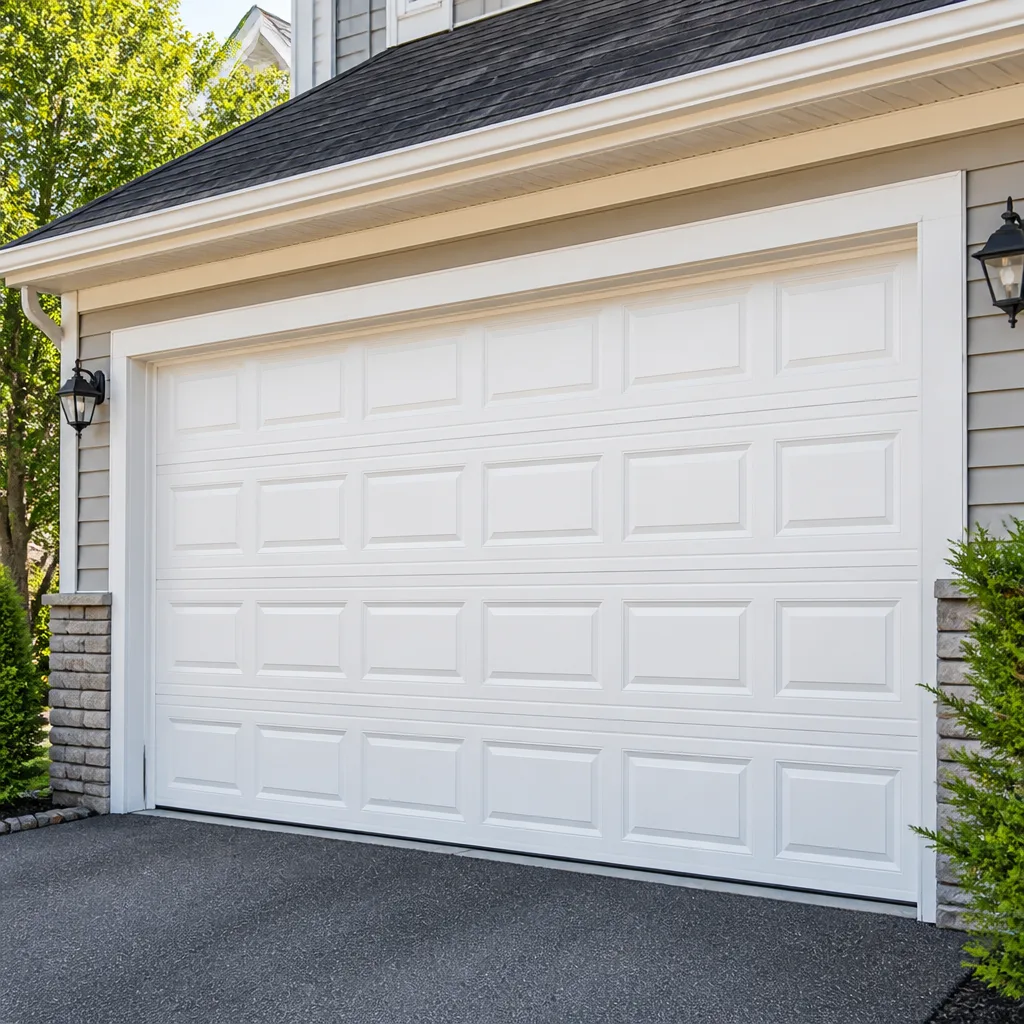 Raised-panel steel
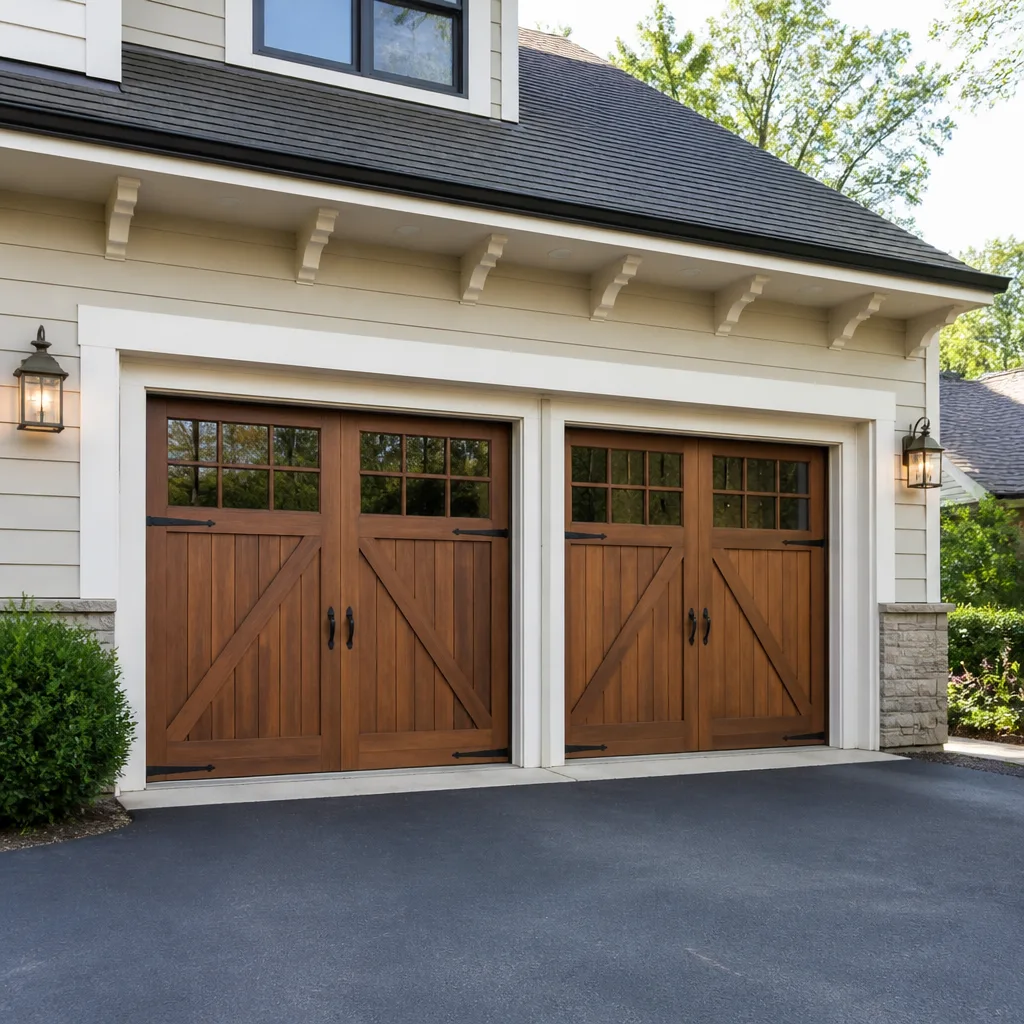 Carriage house
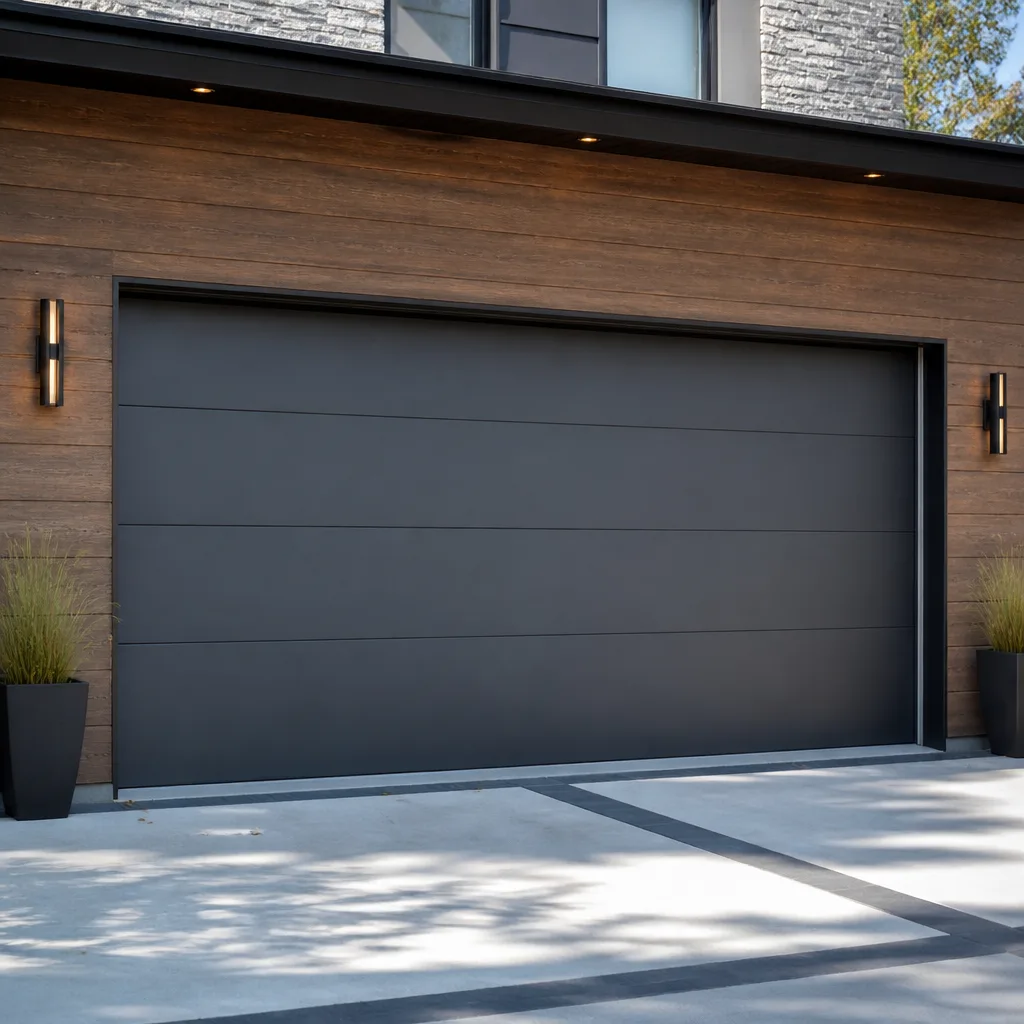 Modern flush
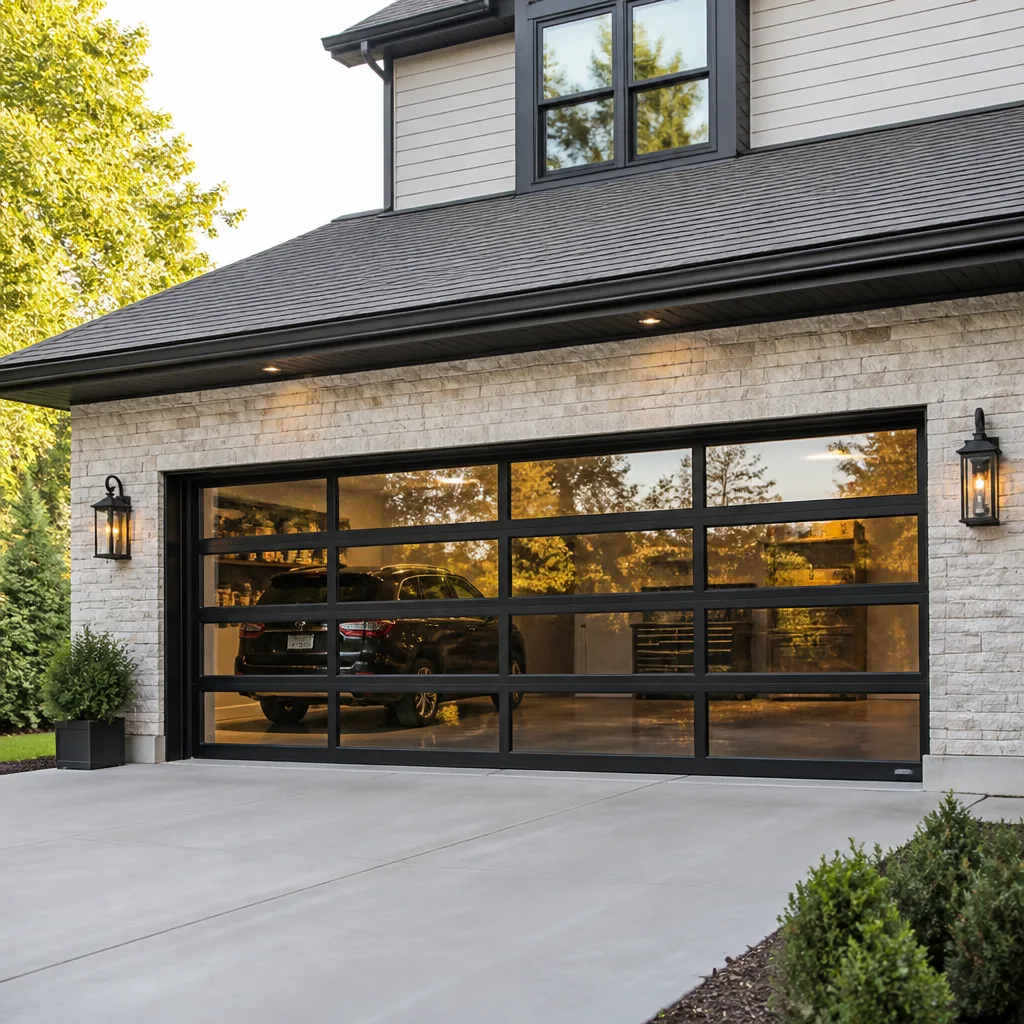 Full-view glass
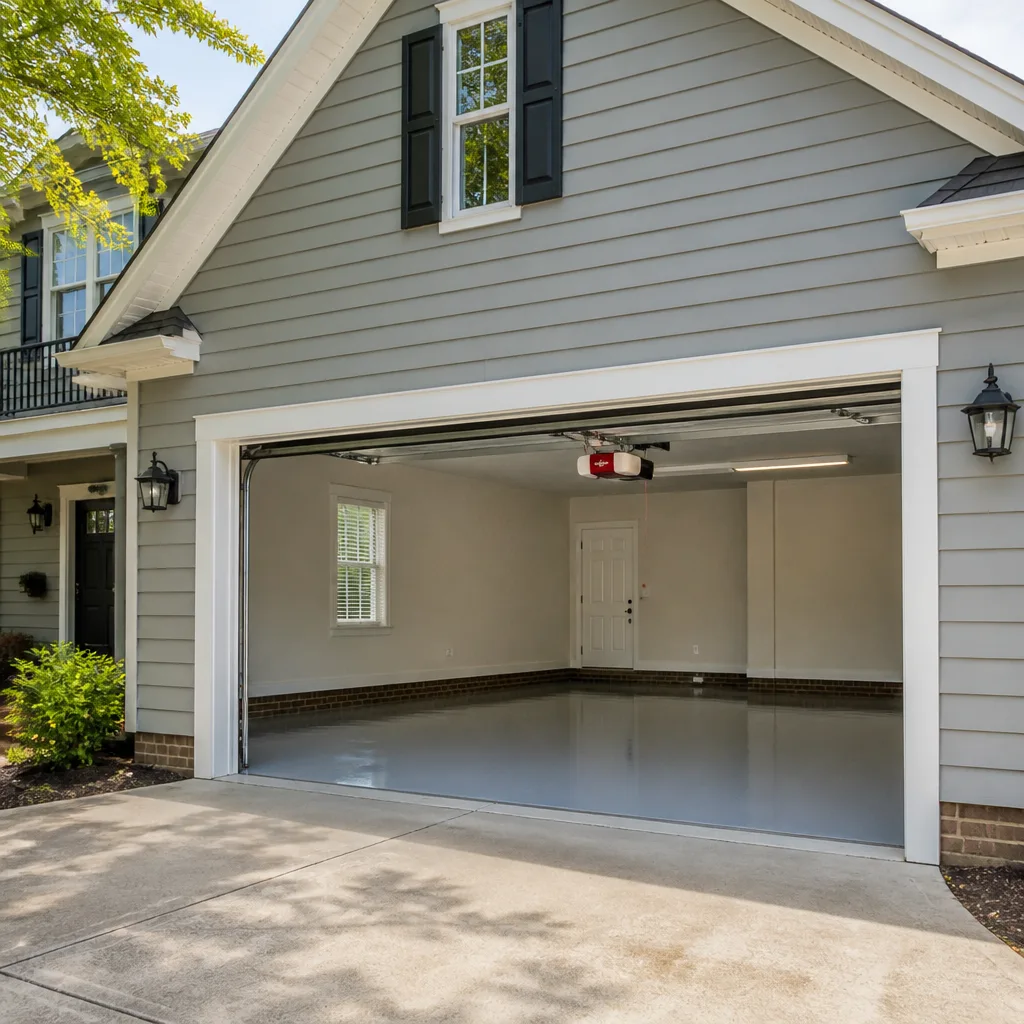 LiftMaster openers
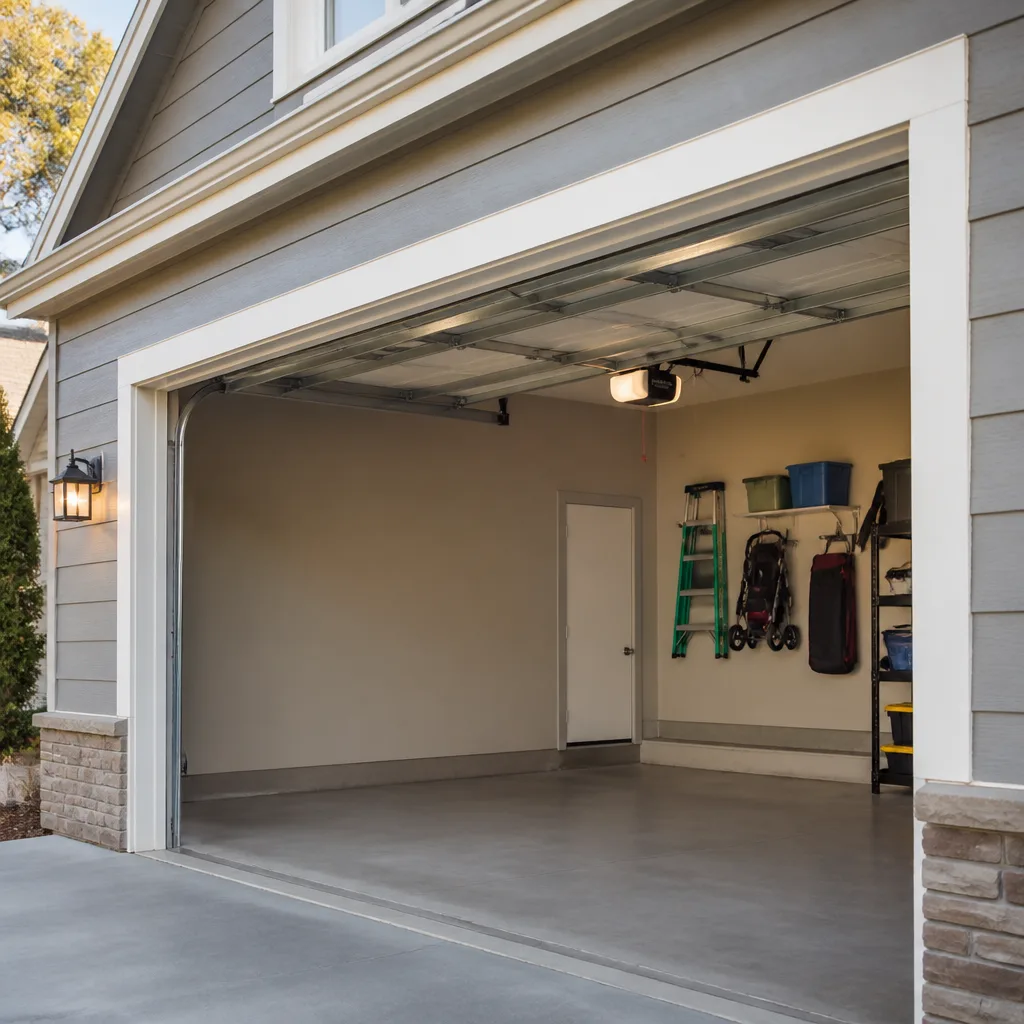 Chamberlain openers
Full 25-point door and opener safety check with every visit - springs, cables, rollers, tracks, and your LiftMaster or Chamberlain opener included
You get a price before we start. It does not change when the pro arrives.
Get your free estimateGarage Door Repair Troubleshooting in Plantation: Common Problems and How to Fix Them
A garage door that reverses before it closes is not a sensor problem as often as people think. More often than not, the safety sensors are only reporting a tension imbalance up the line, and the homeowner replaces photo eyes that were working fine. Misreading the symptom is how money gets spent on parts that weren’t broken. In this guide we map each behavior you’re seeing – won’t open, reverses, grinds, sags on one side – to the mechanical system actually responsible, so you can diagnose first and spend second. We’ll also cover the two-minute balance test you can safely do yourself, what to lubricate versus what to leave alone, and the Plantation humidity and salt air conditions that change how hardware fails here compared to what national guides assume.
Quick Answer
Most garage door failures fall into six mechanical categories: spring and cable tension, track and roller alignment, opener drive and logic, panel and section integrity, sensor and safety circuit, and hinge and hardware wear. Matching your symptom to the right category tells you whether you’re looking at a small part or a service call. Lubrication, sensor alignment, and remote reprogramming are safe to handle yourself. Spring replacement, cable drum work, and anything involving the torsion assembly require a trained technician – those parts store enough energy to cause serious injury.
Styles & brands we work with
- Raised-panel steel
- Carriage house
- Modern flush
- Full-view glass
- LiftMaster openers
- Chamberlain openers
Table of Contents
- Symptom-to-System Mapping: What Each Behavior Tells You
- The Two-Minute Balance Test You Can Do Safely
- How Plantation Humidity and Salt Air Change the Troubleshooting
- What’s DIY-Safe and What Isn’t
- Opener Troubleshooting: Remotes, Wall Controls, and Drive Systems
- How to Describe Your Problem So You Get an Accurate Quote
- Common Mistakes to Avoid
- When to Call a Professional
Symptom-to-System Mapping: What Each Behavior Tells You
The fastest way to understand a garage door problem is to stop looking at the symptom and start asking which system produces that symptom. A door has five mechanical systems working together, and each one fails in a recognizable pattern. Once you know the category, the diagnostic conversation with a technician gets shorter and the estimate gets tighter.
Here’s how the most common behaviors map to the system behind them:
- Won’t open at all, motor hums but nothing moves. Usually the opener drive – a stripped gear, a broken belt, or a failed capacitor. The motor runs but the trolley doesn’t travel.
- Reverses before closing (or reverses partway down). Most often a tension imbalance in the springs or a track obstruction, not a sensor fault. The sensors are reporting the door stopping, not causing it.
- Grinding or scraping noise while moving. Worn rollers, dry hinges, or a track that’s out of alignment. Metal-on-metal means something has lost its tolerance.
- Sags on one side or hangs crooked. A stretched or broken spring on one side, a snapped cable, or a bent track. Never operate the door repeatedly when it’s hanging uneven – the cables are under load.
- Door closes then immediately opens again. Either the safety sensors are misaligned or obstructed, or the close-force limit is set too low for a door that’s binding.
- Door won’t stay up when you lift it manually. Spring tension is insufficient. If the door crashes down, stop – that’s a spring or cable failure, not a lubrication issue.
We work on what you already have, which matters here. Whether it’s a Chamberlain opener or an Amarr panel, the diagnostic logic is the same – the parts and adjustments are brand-specific. Our technicians have up to 9 years of experience with the major brands you’ll find on Plantation homes, so the mapping happens on the first visit rather than the second. If your door needs hands-on service, our garage door repair team handles both the mechanical hardware and the opener side in one appointment.
The Two-Minute Balance Test You Can Do Safely
Before you call anyone, you can determine whether your door has a balance problem – and that single piece of information will save you money on the diagnostic. The test involves the manual release and your hands, no tools. It’s safe as long as you do it with the door in the position described and you’re not forcing anything.
Here’s the sequence:
- Close the door fully. Make sure everyone is clear of the opening.
- Pull the manual release cord. This disconnects the opener trolley from the door. The door should hang freely.
- Lift the door halfway by hand, slowly. You’re lifting the door’s weight, not fighting it. If it feels like you’re lifting a car, stop.
- Let go at the halfway point. A properly balanced door stays where you released it, or drifts very slightly.
- Observe. If it drops, spring tension is too low. If it rises on its own, tension is too high. If it only stays up with effort, the spring is fatigued.
- Reconnect the trolley by pulling the release cord again and running the opener one cycle to re-engage.
What this test tells you is whether the springs are doing their job. Springs carry the weight of the door; the opener only moves it. A door that weighs 150 pounds being lifted by an opener designed to push 30 pounds is a door on borrowed time. If the balance test fails, the fix is a spring or tension adjustment – and that’s the point where you stop and call.
One more thing to check while you’re in there: look at the tracks on both sides and confirm they’re parallel and free of dents. A door that passes the balance test but grinds on the way down usually has a track problem, not a spring problem. And check the hinges for play by wiggling them – a hinge that moves where it shouldn’t means worn hardware, which is a small fix that becomes a big one if ignored.
How Plantation Humidity and Salt Air Change the Troubleshooting
National troubleshooting guides are written for a generic climate. Plantation isn’t generic. The combination of year-round humidity and salt air off the Atlantic – which reaches well inland on prevailing winds – changes which components fail first, and in what order. If you’re following an online guide that tells you to check the springs first, you may be looking in the wrong place.
Here’s what we see here that a Midwest or Mountain West guide won’t tell you:
- Salt air corrosion on hardware. Hinges, rollers, track brackets, and the bottom bracket bolts are the first to show pitting and rust film. That corrosion adds friction, which the opener reads as resistance, which can trip the force limit and make the door reverse. The symptom looks like a sensor problem. The cause is corroded hardware.
- Humidity and wood door swelling. Wood panels absorb moisture and swell at the seams, which can cause binding in the tracks, difficulty closing fully, and paint failure at the joints. A wood door that closes stiffly in the wet season and fine in the dry season is telling you the problem is the panel, not the opener.
- Lubricant breakdown. Heat and humidity degrade grease faster than dry heat alone. Rollers that were lubricated last year may be dry by the middle of this one. A dry roller produces a grinding noise that sounds like a failing bearing.
- Track expansion. Metal tracks expand and contract with temperature swings, and the fasteners loosen over time. A track that’s a quarter-inch out of plumb can cause the door to bind on one side.
Plantation homeowners often describe their door as “getting stiff” during the hotter, wetter months. That’s the corrosion-and-swelling combination at work, and it usually responds well to cleaning, lubrication, and hardware replacement rather than a new door. Knowing this upfront changes what you check first: hardware condition, then balance, then opener. That order saves a service call on a door whose actual problem was dry rollers and a rusty hinge.
Our technician experience with Clopay and Wayne Dalton wood and steel doors in this climate means the diagnosis accounts for local conditions, not a generic checklist. If the track or hardware needs replacing, or the door is at the end of its serviceable life, our garage door installation team can talk through options – but the first step is always diagnosing what’s actually failing, not selling a replacement.
What’s DIY-Safe and What Isn’t
The single most valuable thing a homeowner can learn about garage doors is where the line sits between “you can do this” and “stop right now.” Most of the routine maintenance is safe. Most of the repair work is not, because of stored mechanical energy.
Safe to handle yourself:
- Lubricating hinges, rollers, and the torsion bar with a garage-door-specific lubricant (not WD-40, which attracts dust).
- Aligning or cleaning the safety sensors at the bottom of the tracks.
- Reprogramming remotes and wall controls – this is a button-press sequence documented in your opener’s manual.
- Tightening track bracket bolts that have worked loose (hand-tight, not impact-driver tight).
- Visually inspecting cables for fraying and springs for gaps or rust.
- Running the balance test described above.
Not safe – call a professional:
- Torsion spring replacement. The torsion spring is wound under high tension. A spring that releases unexpectedly can cause serious injury or worse. This is the most dangerous task in garage door repair and the one most often attempted by people who shouldn’t.
- Extension spring replacement. Also under high tension and also dangerous, though the failure mode differs.
- Cable replacement or cable drum work. The cables hold the door’s weight against the spring tension. If a cable slips while you’re working, the door drops.
- Bottom bracket removal. The bottom bracket is where the cable attaches and is under constant tension.
- Any work with the door in a raised or partially raised position without the proper locking pliers or winding bars.
- Adjusting the opener’s force or travel limits on a door that’s binding – the limits are a safety feature, not a workaround.
Our spring repair specialization exists because this is the one job where getting it wrong has consequences beyond a broken door. We’d rather tell you honestly that a job is above the DIY line than have you find out the hard way. Springs, openers, panels – handled by specialists, not generalists.
Opener Troubleshooting: Remotes, Wall Controls, and Drive Systems
Not every “door won’t open” is a door problem. A surprising number are opener problems, and many of those are programming or power problems you can solve in five minutes. Before calling, run this sequence:
- Check the wall control. If the wall button works but the remote doesn’t, the problem is the remote or the receiver, not the opener motor.
- Check the safety sensors. A blinking light on either sensor means the beam is broken or misaligned. Clear the path, wipe the lens, and check that the sensors are pointing at each other.
- Check the power source. A tripped GFCI outlet or a dead battery in the remote accounts for a lot of “my opener died” calls.
- Look at the opener’s diagnostic light. Most modern openers have an LED that blinks a code. Count the blinks and look up the code in the manual – it tells you exactly what the opener thinks is wrong.
- Test the manual release. If the door opens fine by hand but not with the opener, the problem is the opener or the drive system, not the door.
The brand matters here. A Genie Aladdin Connect and a Chamberlain MyQ handle connectivity, sensor logic, and remote pairing differently, and the diagnostic codes don’t translate. We work across the major opener brands – LiftMaster, Chamberlain, Genie, Craftsman – so we’re diagnosing the system you have, not the one we’d prefer to install. If you’re dealing with a smart-home compatibility question, our garage door opener repair team can sort out whether your opener supports the app you’re trying to connect, or whether the issue is the opener itself.
One pattern worth knowing: an opener that reverses intermittently and shows no error code is usually being told to reverse by the safety circuit. The safety circuit is responding to the door binding. The door binds because of spring, track, or hardware issues. In those cases, replacing the opener doesn’t fix anything – the new opener will reverse too, because the door is still binding. This is where the symptom-to-system mapping from earlier pays off.
How to Describe Your Problem So You Get an Accurate Quote
Most estimates that come back higher than expected are not from dishonest pricing – they’re from incomplete information on the first call. A technician who’s told “my door doesn’t work” has to guess what to bring and what to expect. A technician who’s told “the door goes up about two feet, stops, and the opener light flashes five times” knows exactly what to check. The difference shows up in the quote.
When you call any garage door company in Plantation, have these details ready:
- The symptom, precisely. Does the door not move at all, move partially, reverse, or cycle repeatedly? Does the opener run but the door not move?
- When it started. Sudden onset after a noise, or gradual decline over weeks? Sudden usually means a part failed. Gradual usually means wear or tension loss.
- Any noise. Grinding, popping, scraping, or silence. A “bang” is often a spring. A “grind” is often a roller or track.
- The door’s position when it fails. All the way down, all the way up, halfway, or at a specific point.
- The opener brand and model if you can see it. The label is usually on the back or under the light cover.
- The door’s material and style. Wood, steel, aluminum, or composite; sectional or one-piece.
- Any recent events. A storm, a power outage, a new paint job, a move-in. These help narrow the cause.
- Whether the manual release is currently engaged. If you pulled the release and couldn’t re-engage it, tell the technician – it changes what they do first.
We ask these questions because a right diagnosis on the first call means the right parts on the first visit. Our free estimates in Plantation are based on what we find, and the price is quoted and agreed before any work starts. You won’t get a price on the phone that becomes a different number once the technician is standing in your garage. The written estimate is the price.
If your door is stuck open and your home is exposed, mention that when you call. Emergency garage door service exists for exactly that situation, and the priority changes based on whether the door is secure or your garage is standing open to the street. Fast response, right diagnosis – that’s the order of operations.
Common Mistakes to Avoid
- Replacing the sensors when the door reverses. The photo eyes are rarely the cause of a consistent reversal. Test the balance first; if the door drops on its own, the sensors were doing their job. Replacing them wastes a part and leaves the real problem in place.
- Using WD-40 on the tracks and springs. WD-40 is a solvent, not a lubricant, and it attracts dust and grit that accelerates wear. Garage door tracks and moving parts need a garage-door-specific lubricant. The difference matters more in Plantation’s humidity, where grit sticks to whatever you spray on the metal.
- Disconnecting the opener and forgetting to reconnect it. After the balance test, the trolley must be re-engaged or the opener will run without moving the door. It’s a small thing that produces a big “it’s broken again” call.
- Forcing a door that’s hanging crooked. Running the opener on a door that’s sagging on one side puts uneven load on the good cable and the good spring. A single-part failure becomes a two-part failure quickly.
- Ignoring a rust film on the hinges. In Plantation’s salt air, a light rust film on hardware is an early warning that friction is rising. Cleaning and lubricating the hardware now costs far less than the opener or track work it leads to.
- Adjusting the force limit to get a binding door to close. The force limit is a safety feature that prevents the door from crushing something or someone. Raising it to compensate for a binding door removes the protection and leaves the binding.
- Assuming a new opener will fix a door problem. If the door binds, the new opener will bind too. Diagnose the door first, then decide whether the opener needs work.
When to Call a Professional
Call a professional the moment your issue crosses into spring, cable, or tension territory. If the door drops when you release it at the halfway point, if you’ve heard a bang from the torsion bar, if a cable looks frayed or loose, or if the door hangs crooked, stop operating it and call. Those are the conditions where a homeowner injury is most likely, and they’re not fixable with lubrication or adjustment.
Also call when the door is stuck open and your home is exposed, when the opener is unresponsive after you’ve checked power and sensors, or when the same problem has come back after you tried to fix it once. Recurring problems usually mean the original diagnosis was on the wrong system, and a trained eye sorts that out faster than a second round of guesswork.
Plantation Garage Door Repair Pros offers free estimates in Plantation – call (866) 937-8852. We service LiftMaster, Chamberlain, Genie, Clopay, Amarr, Wayne Dalton, Craftsman, and Raynor equipment, so whether it’s a Raynor torsion assembly or a Genie opener, we know it cold. Our technicians have up to 9 years of experience, and the price is quoted and agreed before any work starts.
See the difference
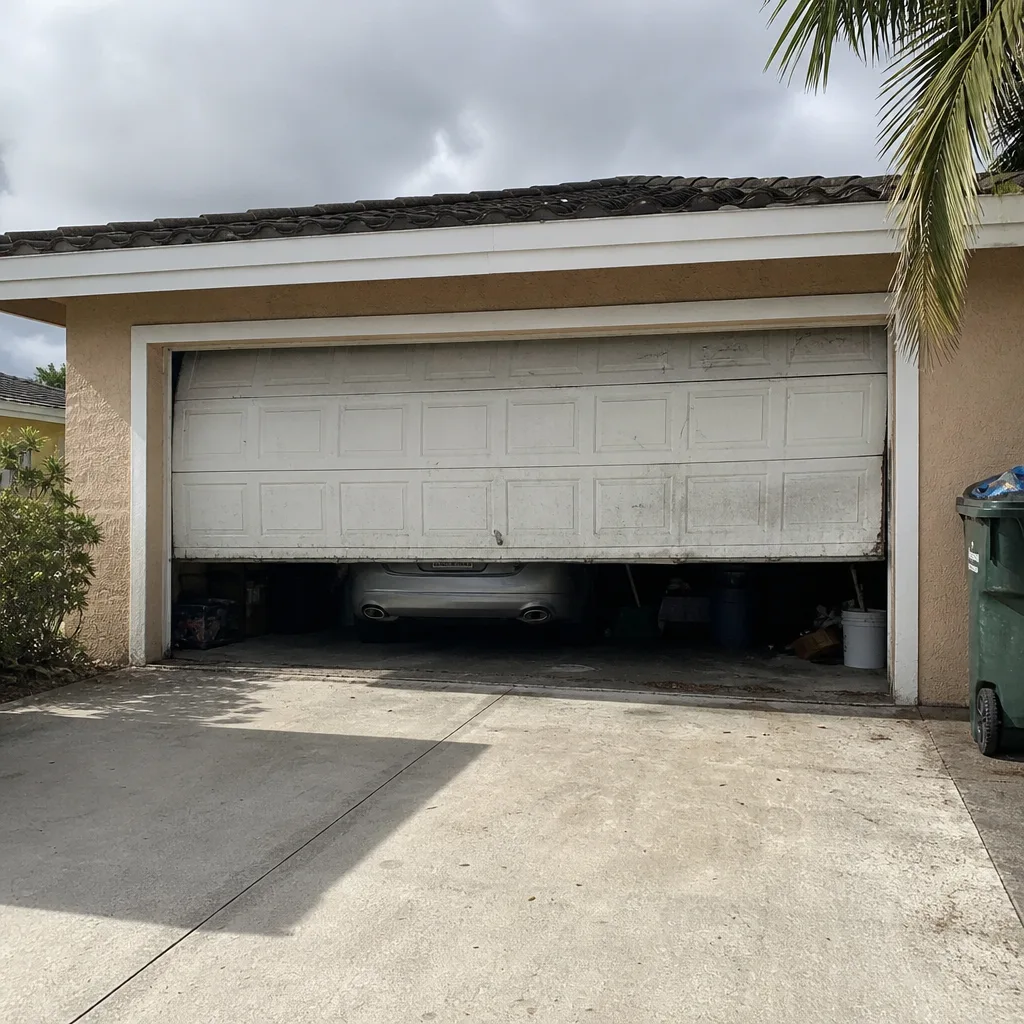 Before
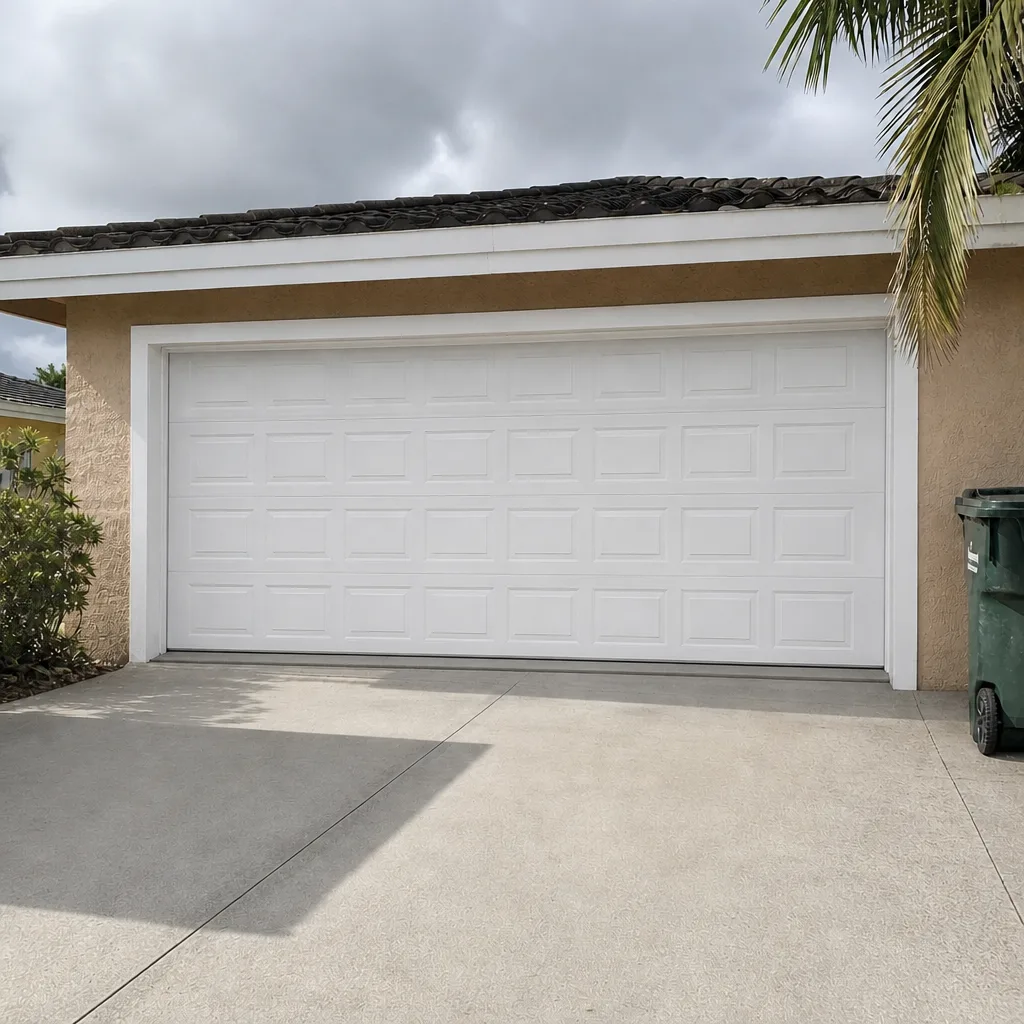 After
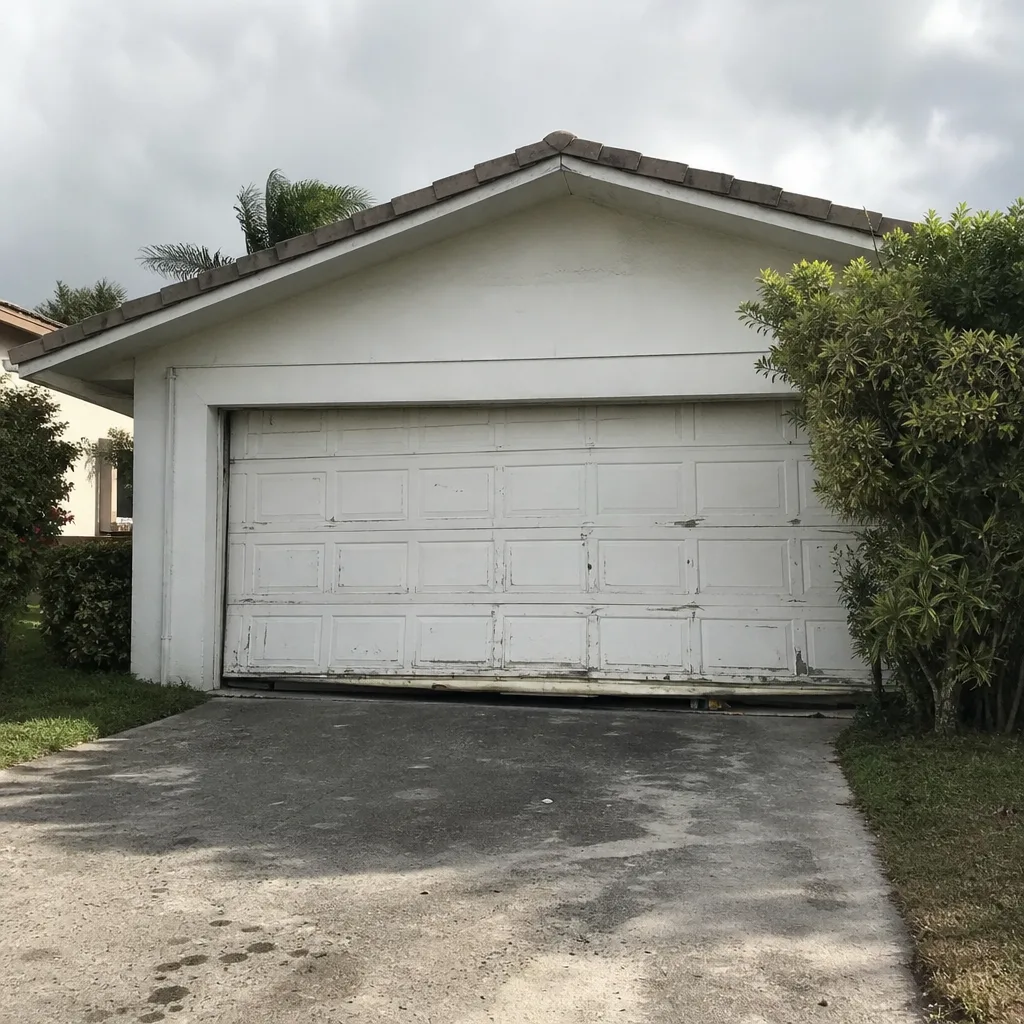 Before
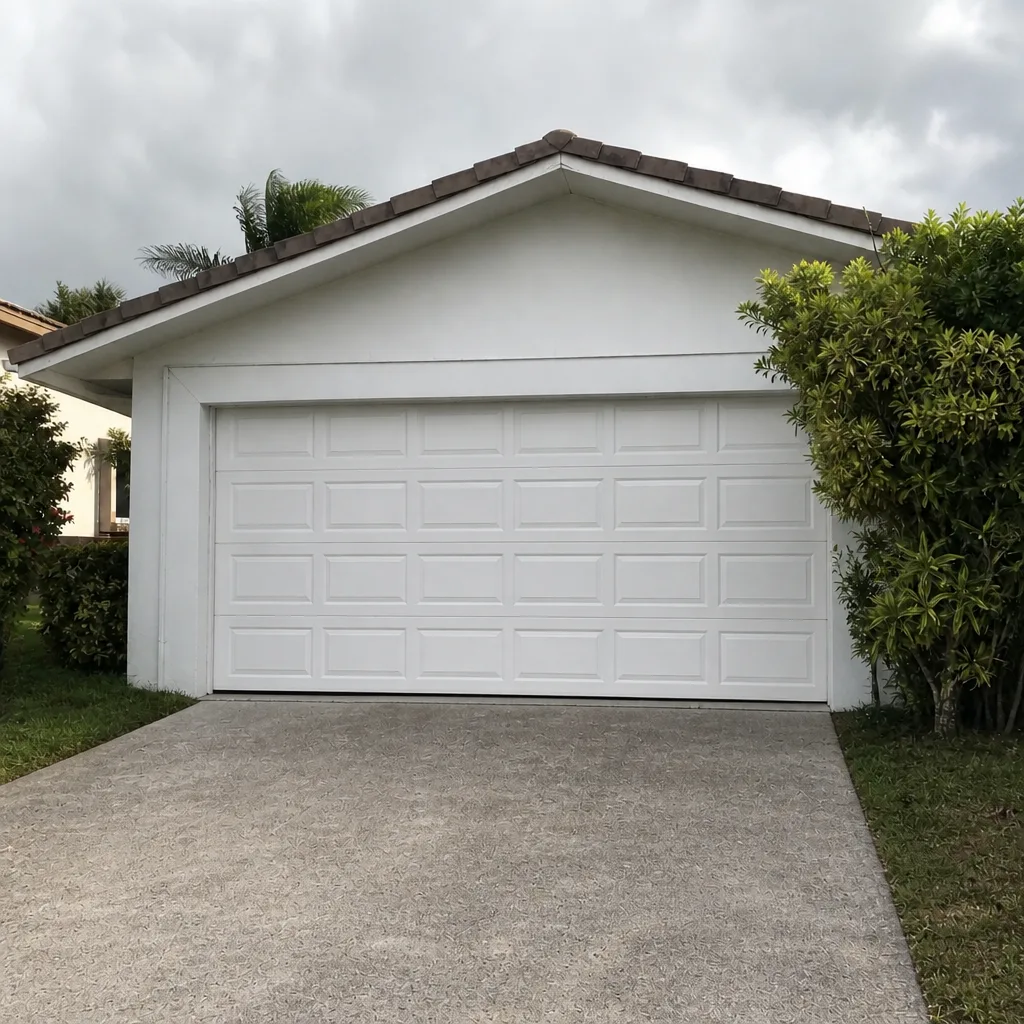 After
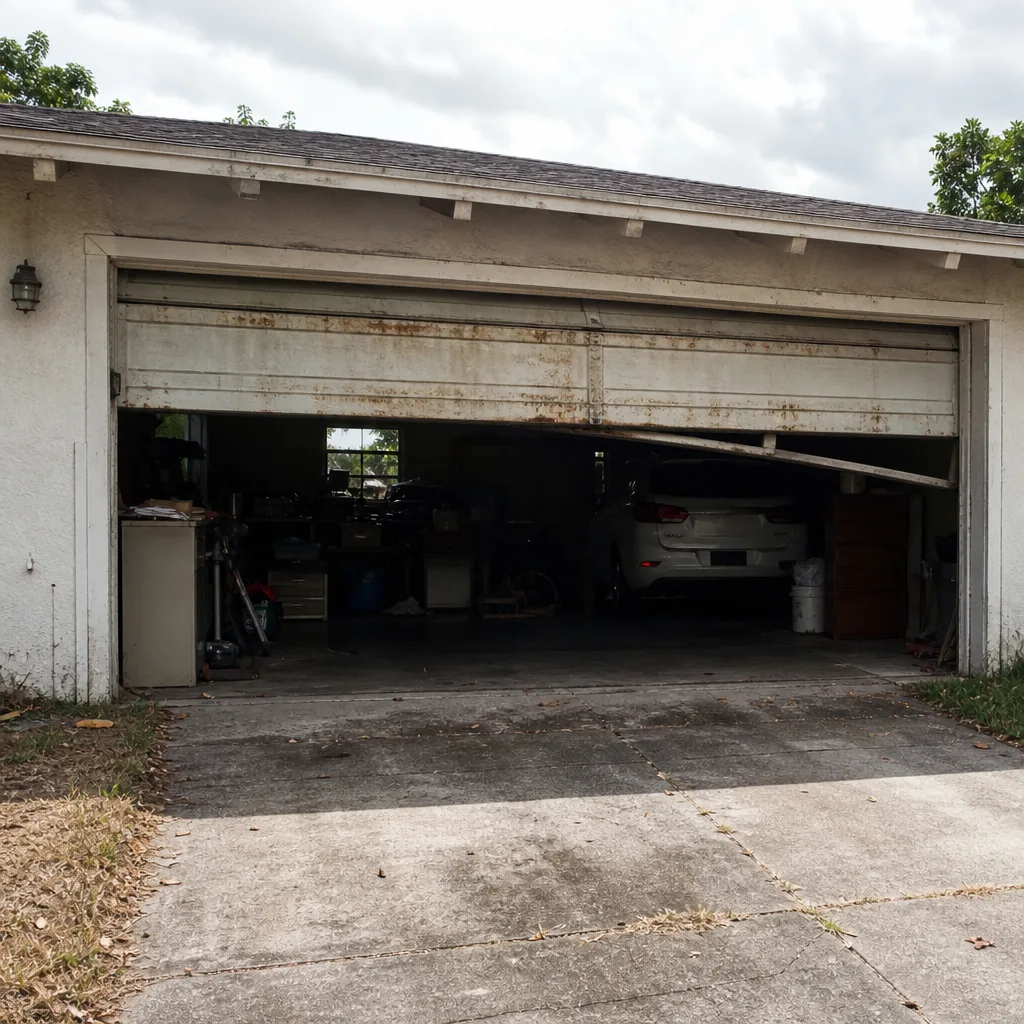 Before
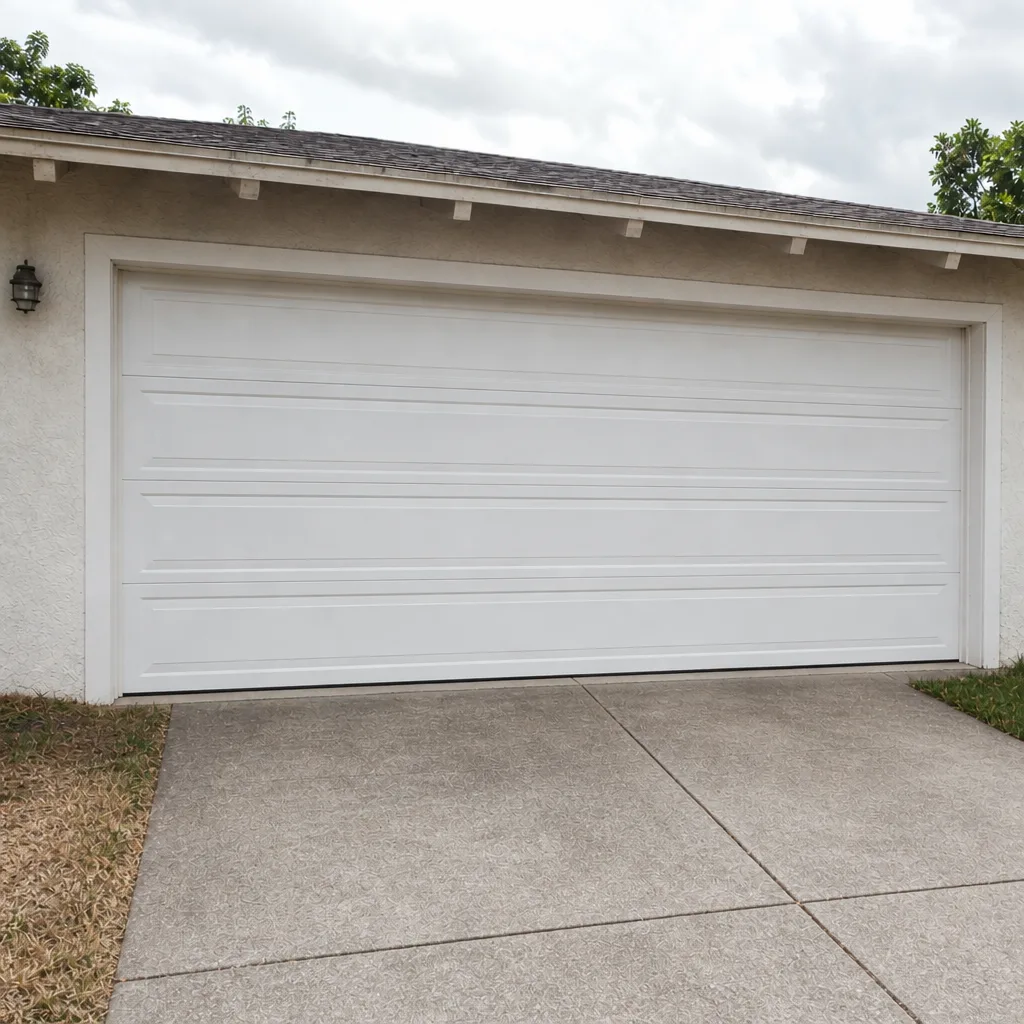 After
Frequently Asked Questions
Not usually. In most cases the safety sensors are reporting a tension imbalance or a binding door, not causing the reversal. Run the balance test first: if the door won’t stay up at the halfway point when you release it, the springs are the problem, not the photo eyes. If the door is balanced but still reverses, check the sensors for misalignment and clear the lens. Call (866) 937-8852 for an exact quote on a spring or tension adjustment – estimates are free.
Spring repair pricing depends on whether you have one spring or a matched pair, and on the door’s size and material. A matched pair is usually replaced together, and the pair costs about twice the single-spring price. We give you a written estimate before any work begins, and that written estimate is the final price. Call (866) 937-8852 for a free estimate tailored to your door.
No, and this is the one repair we’d tell you never to attempt. Torsion and extension springs store enough energy to cause serious injury when they release unexpectedly, and the tools required to wind and unwind them safely aren’t standard homeowner equipment. Spring repair is the task where a professional’s training matters most.
Grinding usually means metal-on-metal contact from dry or worn rollers, worn hinges, or a track that’s out of alignment. In Plantation, salt air corrosion on the hardware is a common contributor, since rust film adds friction that the rollers have to overcome. It’s rarely an opener problem. Call (866) 937-8852 and we’ll diagnose the hardware before anything gets replaced.
The most likely cause is the manual release being disengaged, followed by a broken drive component – a stripped gear, a snapped belt, or a failed capacitor. Check the release cord first: if you pulled it for a balance test and didn’t re-engage the trolley, the opener will run without moving the door. If the trolley is engaged and the door still doesn’t move, the drive system needs attention.
Yes. We service LiftMaster, Chamberlain, Genie, Clopay, Amarr, Wayne Dalton, Craftsman, and Raynor equipment. That brand coverage means we diagnose what’s installed rather than steering you toward a replacement based on what we happen to stock. Whether it’s a smart-home connectivity issue with a MyQ or Aladdin system, or a mechanical failure in an older Craftsman unit, we work on what you already have.
The Bottom Line
Most garage door problems are diagnosable before a technician arrives, and the diagnosis determines whether you’re looking at a small part or a service call. Match your symptom to the right system first: tension, track, opener, panel, sensor, or hardware. Run the balance test to rule springs in or out. Know where the DIY line sits, and never cross it for spring or cable work. And when you describe the problem, be specific – it’s the difference between an accurate quote on the first call and a surprise on the second. In Plantation, remember that humidity and salt air skew the diagnosis toward hardware and corrosion before anything else. When the issue crosses into tension or you need a same-day assessment, we’re a call away.
If your door is stuck, reversing, grinding, or just not behaving the way it should, call Plantation Garage Door Repair Pros at (866) 937-8852 for a free estimate. We repair, replace, and install across all the major brands, and we’ll tell you honestly what the fix is – and what it costs – before any work starts. You can also start with our Plantation Garage Door Repair Pros home page to see the full range of what we handle.
Written by the team at Plantation Garage Door Repair Pros.